

How to Train the Aging Brain
 Here are some useful tips for middle aged people on how to get their brain to perform better.
By BARBARA STRAUCH (NY Times)
I LOVE reading history, and the shelves in my living room are lined with fat, fact-filled books. There’s “The Hemingses of Monticello,” about the family of Thomas Jefferson’s slave mistress; there’s “House of Cards,” about the fall of Bear Stearns; there’s “Titan,” about John D. Rockefeller Sr.
The problem is, as much as I’ve enjoyed these books, I don’t really remember reading any of them. Certainly I know the main points. But didn’t I, after underlining all those interesting parts, retain anything else? It’s maddening and, sorry to say, not all that unusual for a brain at middle age: I don’t just forget whole books, but movies I just saw, breakfasts I just ate, and the names, oh, the names are awful. Who are you?
Bright Star
 Boy, you have to be a true romantic to enjoy this film. A few weeks ago I wrote about John Keats in my diary. He is a magnificent poet. But this film about his love for Fanny Brawne is tough to sit through unless you are able to be deeply moved by true romance and require no drama: nothing much to happens except two people who are deeply in love with another. The Immortal Beloved film about Beethoven’s love interest is an cliffhanger compared to Bright Star. John Keats’s inner life and the poetry it allowed to emerge are much more rewarding than this film. If only Keats had not died at the tender age of 25.
Pirate Radio
 This film is a like a glass of wine that you first don’t like because the taste is so foreign (British dry humor). But after you continue to drink you warm up to the taste. And towards the end it becomes a quite magnificent comedy. Rock n’ Roll in the eyes of the autorities had the status of gangster rap. If you are into the history of rock n’ roll, even if it is fictional, Pirate Radio film has some funny moments.
Now Obama crashes a Party
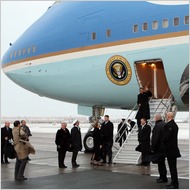 Health care reforms is hanging in the balance. This is not a good time to have to fly to Copenhagen to salvage even a minimal agreement to contain global warming. President Obama had to resort to some unusual diplomatic tactics: to crash private negotiations. The NYT provides details.
The deal eventually came together after a dramatic moment in which Mr. Obama and Secretary of State Hillary Rodham Clinton burst into a meeting of the Chinese, Indian and Brazilian leaders, according to senior administration officials. Mr. Obama said he did not want them negotiating in secret. The intrusion led to new talks that cemented central terms of the deal, American officials said. ... But Mr. Obama, who left before the conference considered the accord because of a major storm descending on Washington, noted that the agreement was merely a political statement and not a legally binding treaty and might not need ratification by the entire conference. Mr. Obama said before he left Copenhagen that he was confident that a final accord would be reached here. He looked weary and his eyes were bloodshot as he left the conference center for his motorcade to the airport.
Continue ReadingWashington is not Hollywood: Ironies in the Salahis Episode
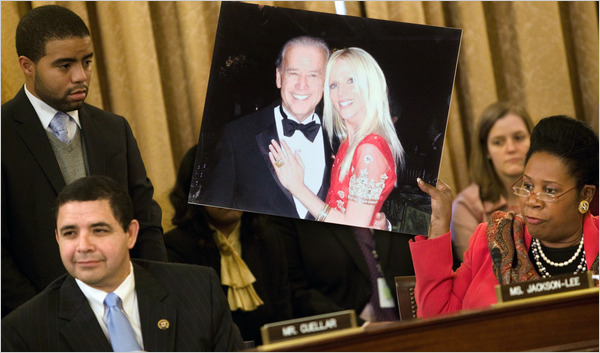 The NY times yesterday reported in detail on the style breaches that the Salahis’ commited. Here are some funny lines at the end of the article.
It doesn’t seem to matter that the couple were never a threat. Nor does it seem to matter that security at the next state dinner will obviously be so tight that anyone who receives an invitation ought to leave the moment it arrives in the mail, because they’re going to have their IDs checked and retinas scanned for a good long time. Nor does it matter that the Salahis are now struggling with a fate so rich with irony it seems like something O. Henry scripted: A couple besotted with fame and media attention finally wins both, but by doing so lands in so much trouble that when every TV show in the country begs them to come on the air and blab, they have to say no. O.K., they accept one, the “Today” show. But that’s it. To every other invitation—yes, authentic invitations—they must decline. Seriously, Washington, think about how much that has to hurt the Salahis. Now, is that not punishment enough?
Continue ReadingTwo Cars, One Night
 Rarely do I see good short films. Two Cars, One Night is a sweat little film. I stumbled across it on home page of youtube. I have no idea how this film became so popular within little more than a week. I guess most of us appreciated the romance of childhood once we are adults.
Continue Reading
Free Ride in the Presidential Flight Simulator
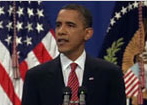 So your mother told you that one day you also can be president ...She exaggerated a bit your chances of getting into the White House—nothwithstanding the recent episode with Michaele and Tareq Salahi. But today you can step into the presidential flight simulator and make a decision about how to handle the request of your generals to increase signanficantly the troops fighting in Afghanistan. The first article will take you behind the scences of the process that led to the decision over a three months period. Make your decision. Then think about how you would address the country. Give a little speach to anyone who want to listen. Next you can read or watch how Obama did address the nation. Finally, you can read two diametrically opposed reactions. David Brooks cheers your decision wheres Frank Rich finds it fundamentally flawed. After taking the ride, tell your mother whether you still want to be president.
How Obama Came to Plan for ‘Surge’ in Afghanistan
By PETER BAKER (NY Times, Dec 6, 2009)
WASHINGTON—On the afternoon he held the eighth meeting of his Afghanistan review, President Obama arrived in the White House Situation Room ruminating about war. He had come from Arlington National Cemetery, where he had wandered among the chalky white tombstones of those who had fallen in the rugged mountains of Central Asia.
Background: A Novelists explains what just happened in Switzerland
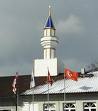 Switzerland’s Invisible Minarets
By PETER STAMM Winterthur, Switzerland
THREE years ago I was invited to the Tehran International Book Fair; afterward I traveled around the country. The mosques I visited were so empty as to give the impression that Iran was as secular as Western Europe.It wasn’t until I took a trip to a place of pilgrimage in the mountains that I saw large numbers of the faithful. The traffic started piling up even before my group reached the town of Imamzadeh Davood. A few of the pilgrims were making the trek on foot, together with the sheep they intended to sacrifice. The narrow streets were bustling just as at Christian places of pilgrimage: booths crammed with junk, groups of teenagers taking pictures of each other, every nook and cranny packed with candles lighted by believers in the hope their wishes would be fulfilled.
Continue Reading

© 2026 Peter Murmann. Powered by ExpressionEngine.
